Bidirectional charging: Which cars are suitable for electricity storage?

The sun is shining, the solar roof is running at full speed, but where to put the excess electricity? The best way is to get into an e-car. The electricity stored there can be easily fed back into the home power grid if necessary and makes lamps light up and TVs running. How does that work? The magic word is bidirectional charging.
So far, this type of charging has not yet caught on, if you still want to look for an e-car, we have some offers for you here:
| Model | Offers from | |
| Hyundai Ioniq 5 | €36,110 | Compare offers |
| Cupra Born | €34,400 | Compare offers |
| VW ID.Buzz | €46,492 | Compare offers |
| VW ID.7 | €48,213 | Compare offers |
| Skoda Enyaq iV | €36,866 | Compare offers |

Bidirectional charging: E-car as electricity storage?
Bidirectional charging means that energy is exchanged in both directions. The electric car can not only be charged with electricity, but also emit electricity. In the meantime, the e-car acts as an energy storage device, so to speak.
The first thing you have to know is that an electric car only runs on direct current, because the battery is only designed for this. Therefore, the alternating current from the power grid must be converted into direct current. If the car is stationary for a while and the power is not consumed, the battery simply stores the electricity.
If you now want to use the electricity from the e-car battery for house lighting, for example, the direct current must be converted back into alternating current. This is exactly what this charging process is all about, because it is no problem for appropriately designed chargers to achieve this.

Ist bidirektionales Laden in Deutschland erlaubt?
Ja, bidirektionales Laden in Deutschland ist erlaubt. Bereits im Jahr 2019 wurde die entsprechende EU-Richtlinie in nationales Recht umgesetzt.
Welche Einsatzgebiete für bidirektionales Laden gibt es?
Es gibt drei Möglichkeiten, die im E-Auto gespeicherte Energie anderweitig zu verwenden:
Vehicle-to-home (V2H)
Wer sich hierfür entscheidet, möchte den gespeicherten Strom nutzen, um das Heimstromnetz zu versorgen. Ein Wandler, der aus dem Gleichstrom wieder Wechselstrom herstellt, ist meist in der Wallbox integriert. Dein Elektroauto lädt demnach die hauseigene Photovoltaikanlage, und das E-Auto wurde vorher idealerweise durch die Solaranlage gespeist. Somit ist der gesamte Kreislauf für dich kostenlos und nachhaltig.
Vehicle-to-grid (V2G)
Bei dieser Methode wird größer gedacht. Das bedeutet, dass man möglichst viele Elektroautos ins Energienetz einbindet. Die im E-Auto gespeicherte Energie soll in das allgemeine Stromnetz zurückgeführt werden. Sinnvoll ist das beispielsweise, um Stromspitzen entgegenzuwirken. Wenn man das E-Auto zu Nebenverkehrszeiten lädt, kann man zu den Spitzenzeiten die Energie wieder zurückführen, um das Stromnetz zu entlasten.
Natürlich kannst du in der Zwischenzeit auch mit dem Auto fahren, doch die meisten Fahrzeuge stehen gut 90 Prozent der Zeit, da ist es sinnvoll, die V2G-Möglichkeit zu nutzen. Das E-Auto wird somit als Stromspeicher benutzt.
Vehicle-to-load (V2L)
Als dritte Möglichkeit ist Vehicle-to-load eine Art des bidirektionalen Ladens. Hierbei stellt das E-Auto Strom für andere Geräte bereit – z.B. Laptop, Smartphone oder E-Bike. Dabei gibt es im Auto eine Steckdose, in die man die Geräte einstecken und laden kann.
Welche Autos können bidirektional laden?
Vorreiter für diese Ladetechnik ist Nissan, denn der Nissan Leaf kann schon seit einigen Jahren als E-Auto bidirektional laden. Generell kann man sagen, dass Modelle asiatischer Hersteller häufiger dafür geeignet sind, denn der im asiatischen Raum weit verbreitete CHAdeMO-Stecker war von Anfang an dafür ausgelegt. Nur für diesen Anschluss gibt es aktuell auch ein gültiges Protokoll für das V2G-Laden, um Strom in das öffentliche Netz einzuspeisen.
Der in Europa verbreitete Standard CCS beherrscht das meist noch nicht.
Folgende Modelle können aktuell (Stand: 07/2025) bidirektional laden:
| Modell | Art | Anmerkung |
| Cupra Born | V2H | nur mit 77 kWh-Akku & neuester Software 3.5 |
| Hyunai Ioniq 5 | V2L | |
| Hyundai Ioniq 6 | V2L | |
| Kia EV6 | V2L | |
| Kia EV9 | V2L | |
| Kia Niro EV | V2L | |
| MG4 | V2L | |
| MG5 | V2L | |
| Nissan Leaf | V2H/V2G (vorbereitet) | |
| Mitsubishi Outlander | V2H/V2G (vorbereitet) | |
| Polestar 3 | V2L/V2H/V2G (vorbereitet) |
|
| Renault 5 E-Tech | V2G | |
| Skoda Enyaq | V2H | nur mit 77 kWh-Akku & neuester Software 3.5 |
| Volvo EX90 | V2L/V2H/V2G (vorbereitet) |
|
| VW ID.3 | V2H | nur mit 77 kWh-Akku & neuester Software 3.5 |
| VW ID.4 | V2H | nur mit 77 kWh-Akku & neuester Software 3.5 |
| VW ID.5 | V2H | only with 77 kWh battery & latest software 3.5 |
| VW ID.7 | V2H | only with 77 kWh battery & latest software 3.5 |
| VW ID.7 Tourer | V2H | only with 77 kWh battery & latest software 3.5 |
| VW ID.Buzz | V2H | only with 77 kWh battery & latest software 3.5 |
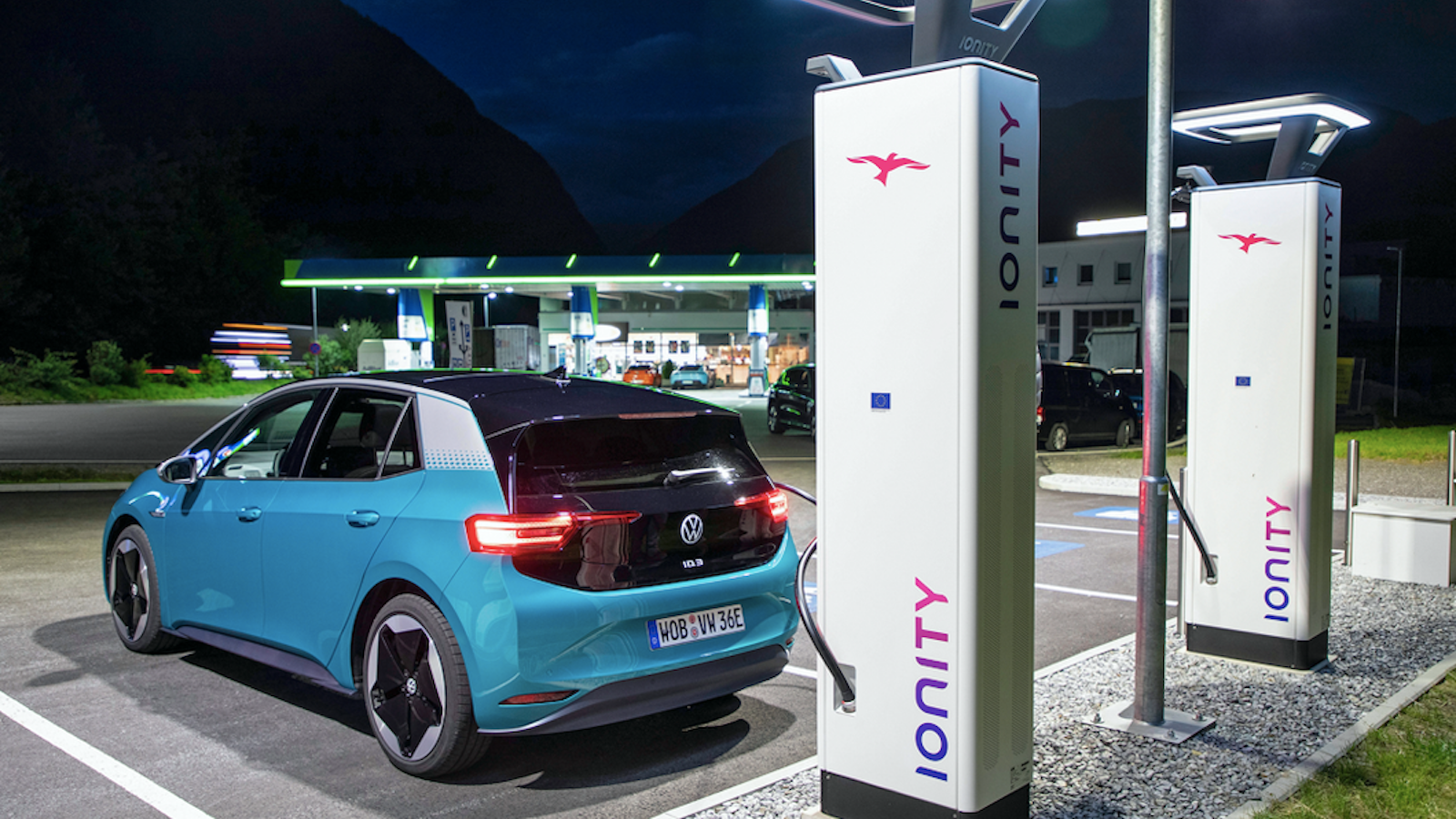
The Ioniq 5 and its sister model EV6 confirm the exception to the CCS standard. The two models can also charge bidirectionally with this charging standard. However, Hyundai and Kia are not yet focusing on this charging technology in their development. However, it would be possible to charge external devices with up to 3.7 kW via an adapter on the CCS connection. Accordingly, one could also give other e-cars a jump start.
Does a Tesla support bidirectional charging?
No, currently no Tesla model supports bidirectional charging.
Are there plans for bidirectional charging at VW?
Since the end of 2023, some ID. models have supported bidirectional charging. If you have a new ID. model with a 77 kWh battery, then the vehicle is equipped with bidirectional charging. For vehicles already delivered, the function is also to be made possible by means of an update to the ID. Software 3.5.
What technical requirements do you need?
It is important that all parameters involved communicate with each other, i.e. that they can understand each other and work together. The following three conditions must be met:
- An electric car
- A suitable charging infrastructure or wallbox
- A uniform language – i.e. software
An electric car is best suited for the purpose of bidirectional charging, plug-in hybrid models can do that too, but are rather negligible for the future. They only have a small battery that can store only a small amount of electricity.
In order for this technology to be implemented on a large scale, a suitable charging infrastructure is needed. This refers to both public charging stations and wallboxes for home use. These devices must convert alternating current into direct current, produce the correct voltage and have a suitable communication standard.
That brings us to the language. As already mentioned, only the CHAdeMO standard is currently designed for bidirectional charging. CCS is catching up, but still has a lot of catching up to do.
Bidirectional wallbox: What models are there?
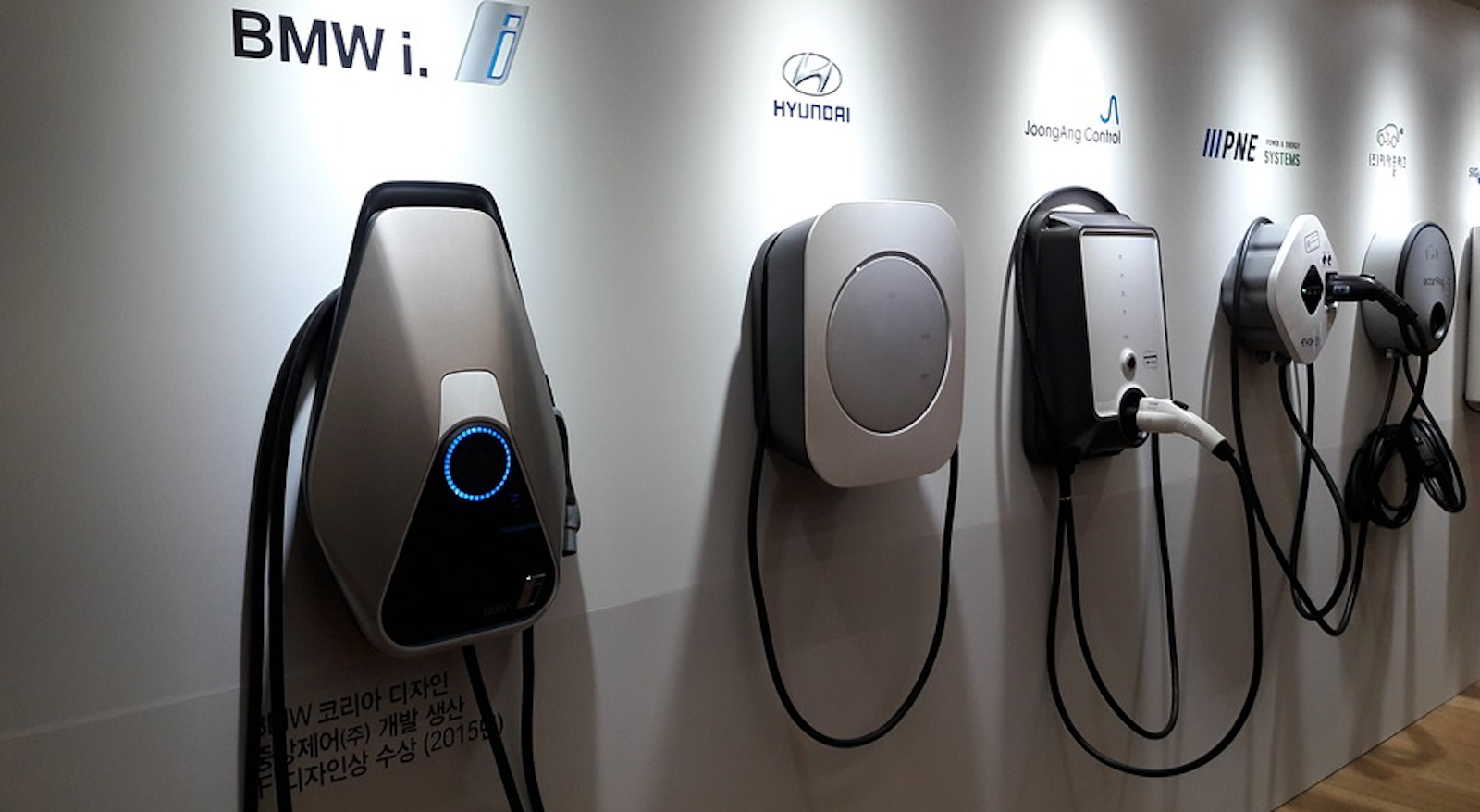
In the meantime, there are already some wallboxes that support bidirectional charging. Here is a selection of providers and corresponding wallboxes:
- openWB Pro
- Smartfox Pro Charger 2
- E3/DC Edison BiDi Wallbox
- Evtec sospeso&charge
- Sigenergy Sigen EV DC Charging Module
- VW bidirectional ID. Charger
- Ford Charge Station Pro
- Sono Wallbox
- go-e Charger PRo
By the way: If you would like to fill up with cheap car electricity, then take a look at the tariffs of our car electricity partners.

Energiewende und Umwelt: Was kann bidirektionales Laden beitragen?
Strom nur noch nachhaltig zu produzieren ist eine große Herausforderung. Vor allem, was das wechselnde Wetter angeht, denn vor allem im Winter stehen Sonnen- und Windenergie noch nicht ausreichend zur Verfügung. Hier könnte eine große Menge Elektroautos, die in das Stromnetz eingebunden sind und als Pufferspeicher dienen, einen wirklichen Effekt haben.
Wenn die Akkus der E-Autos geladen werden, wenn genug Sonne oder Wind zur Verfügung steht und diese Energie dann bei schlechtem Wetter oder bei Windstille wieder ins Stromnetz zurückgeführt wird, würde man den Anteil an erneuerbaren Energien in unserem Stromnetz erhöhen.
Bidirektionales Laden in Deutschland: Das gilt ab 2025
Der ehemalige Bundeswirtschaftsminister Habeck hatte bereits Ende Oktober 2024 zum zweiten Gipfel für bidirektionales Laden geladen. Dort trafen sich ungefähr 90 Entscheidungsträger aus Europa, die sich über die weiteren Schritte zur Einführung von bidirektionalem Laden in Deutschland ab 2025 austauschten.
It was hoped that this would stabilize the electricity system and increase flexibility. In addition, e-car owners should of course benefit and earn money if they make their car available as an electricity storage device.
After the end of the traffic light coalition, another meeting has been settled, and a regulation by the new federal government is still pending. Questions about feeding electric cars into the public grid are still unanswered – especially tax aspects and data protection.